
In the Tarn headed to Provence
We left Saint Émilion (ADD LINK) and headed 160km (100miles) south-east to visit the final one of the ‘Les Plus Beaux Villages de France’ of our trip. Auvillar in the Tarn-et-Garonne department, Occitanie region. Our last night stop was still in the Tarn at Puylaurens, a further 138km (86miles) south. On our final day we were headed to Provence, to Lourmarin, of course, via one of our favorite cities in the south of France, the captivating walled city of Aigues-Mortes.
Auvillar
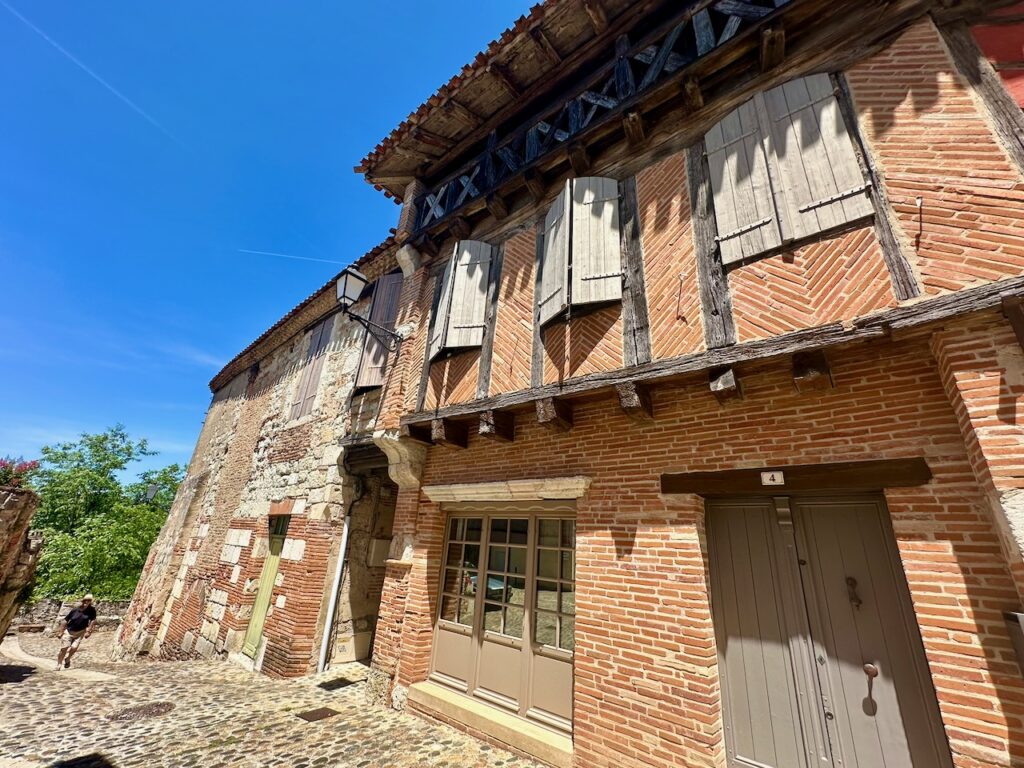
Perched high above the Garonne River in southwestern France, is the beautiful village of Auvillar. It’s strategic location helped it become an important Roman town. During the Middle Ages it prospered through trade and agriculture when it also became an important stop on the Pilgrimage to Santiago de Compostela. Pilgrims travelling along the Via Podiensis (one of the principal French routes to Santiago) still pass through the village today.
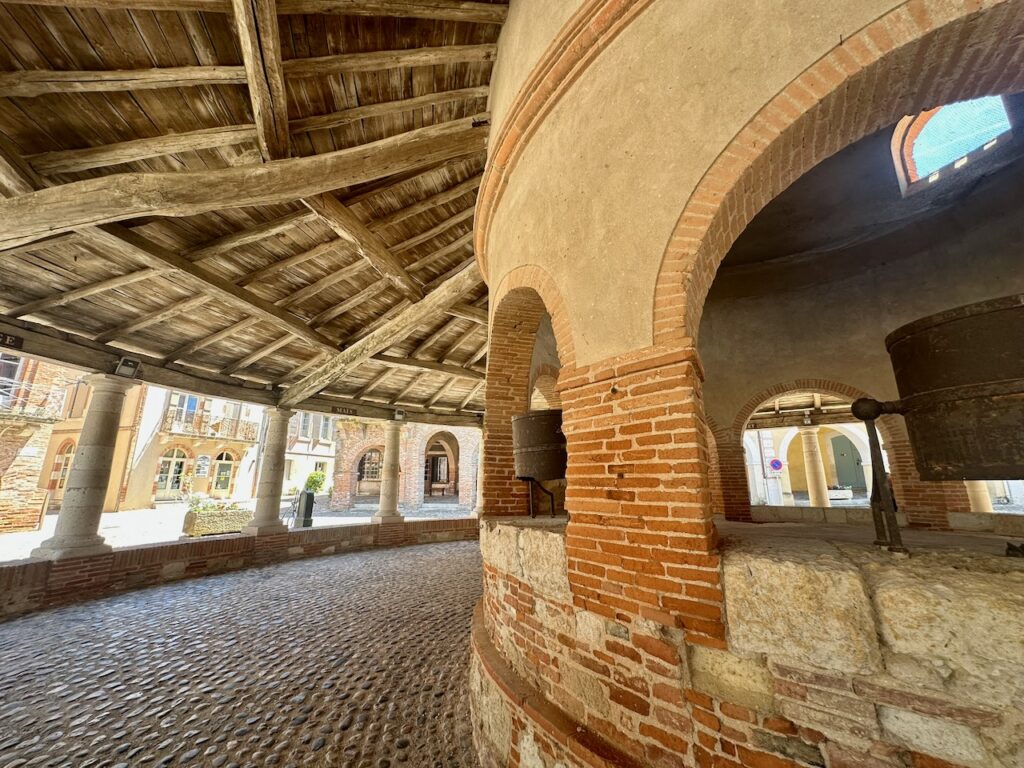
Halle aux Grains, Auvillar
In the 17th and 18th centuries, Auvillar became known for its thriving faience industry (tin-glazed pottery), traces of which can still be found in local workshops and galleries. But the village’s most iconic landmark, built in 1824, is its circular covered grain market.
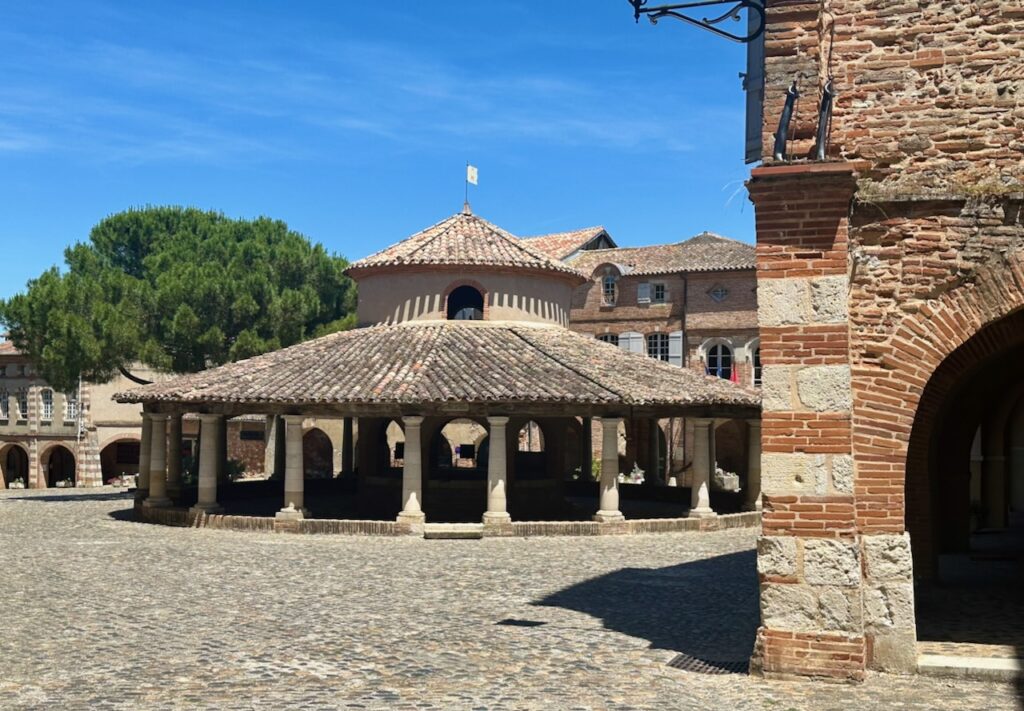
Unlike the rectangular market halls found across much of France, this elegant round structure is unique and sits at the centre of the village square.
Tour de l’Horloge, Auvillar
This medieval clock tower was once the main gateway through the town walls. Passing beneath it brings you into the heart of the old village.
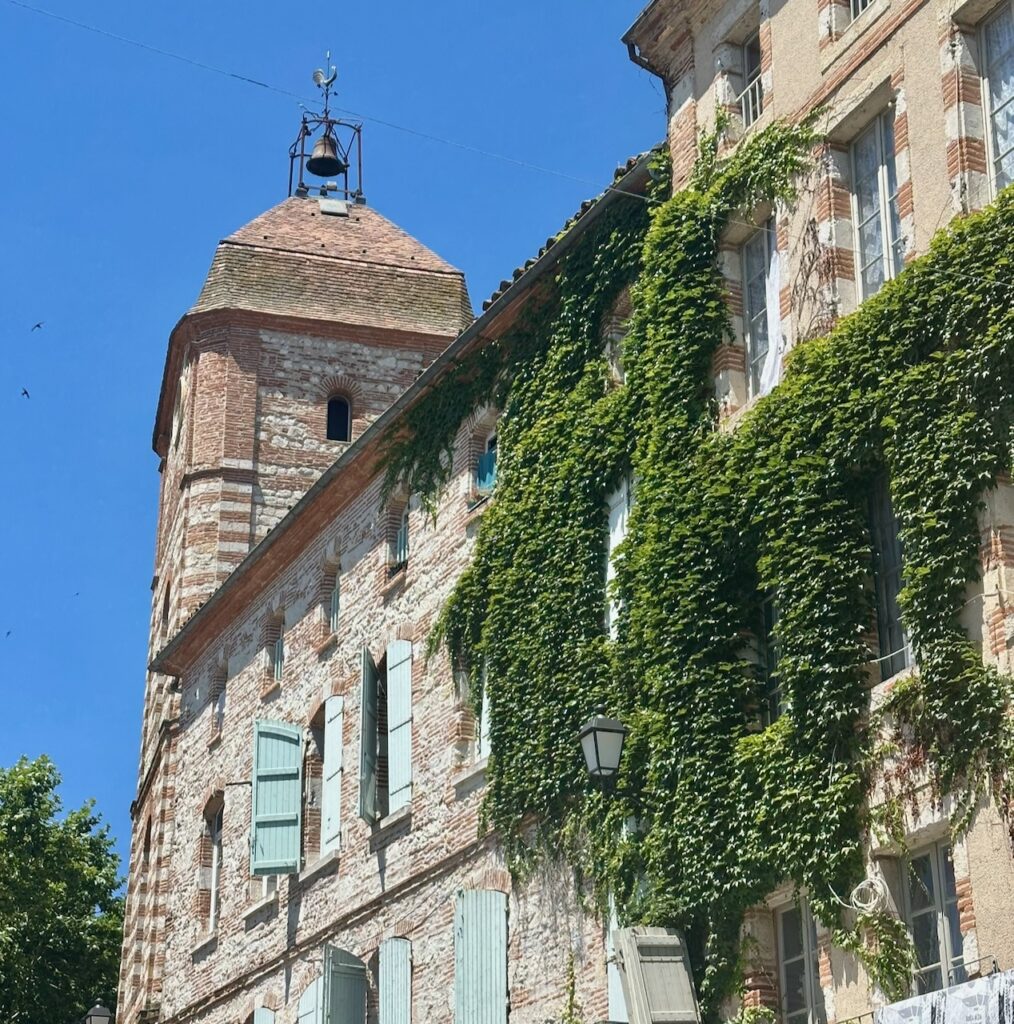
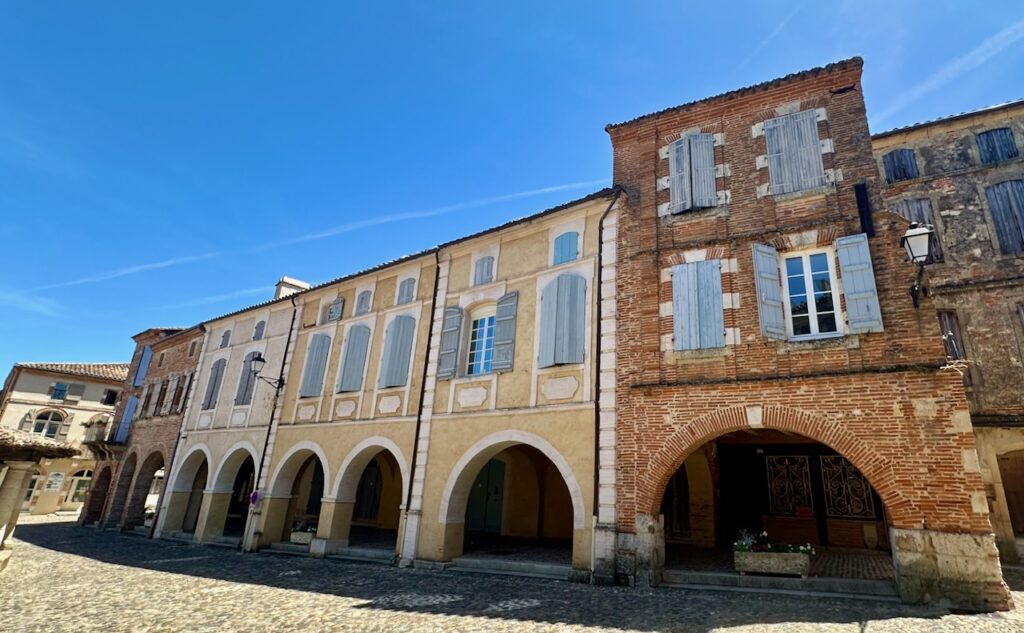
Auvillar has a relaxed, authentic feel, much quieter than some of France’s more famous villages. The narrow lanes are lined with honey-coloured stone houses, artists’ studios, pottery shops and cafés. Allow a couple of hours to wander the streets, enjoy the views and have lunch or coffee in the square beneath the circular market hall.
Day 8: A night in Cap de Castel, Puylaurens
Puylaurens
Puylaurens is a small market town roughly halfway between Toulouse, Albi and Carcassonne. Like many of the towns we’d visited, Puylaurens prospered during the Middle Ages to become an important market centre on the route linking the Atlantic with the Mediterranean. Its hilltop position made it easy to defend, and remnants of its medieval walls still surround the old quarter today.
Cap de Castel, Puylaurens
Cap de Castel, where we were spending our final night before we headed to Provence, is a charming boutique hotel built within the ramparts of a 13th-century Cathar castle overlooking the town of Puylaurens. The hotel occupies a collection of historic buildings dating from the 13th to the 18th centuries, carefully restored while retaining their original stone walls, terracotta floors, exposed beams and fireplaces.
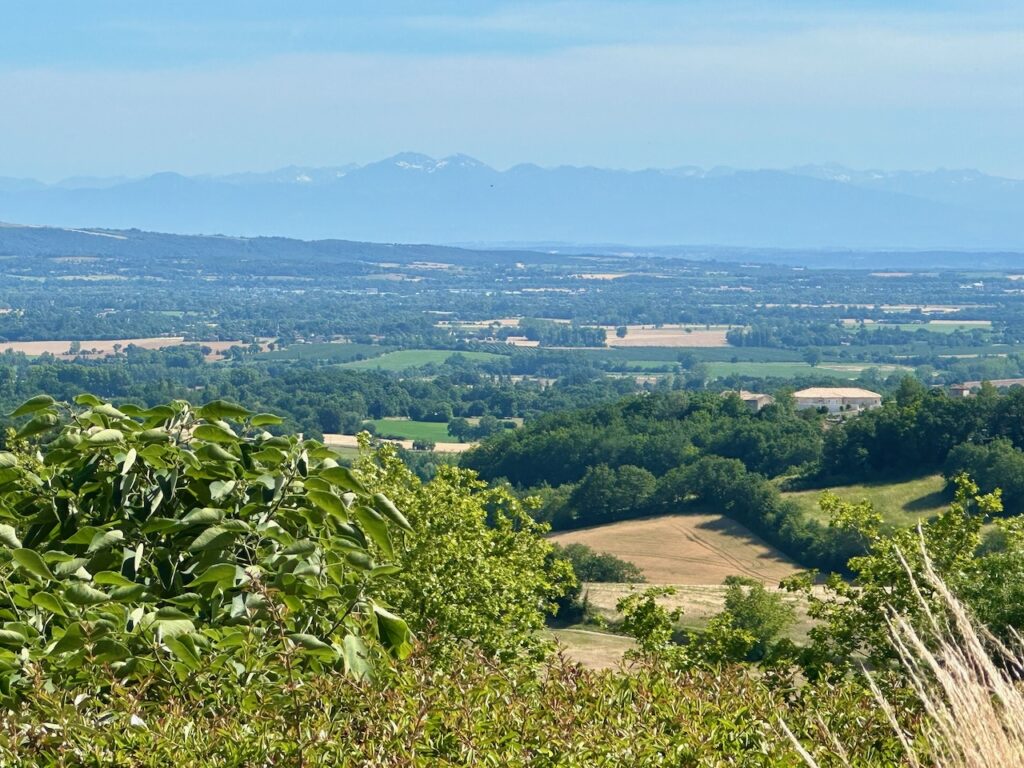
This isn’t a luxury château hotel but rather a simple, character-filled property with just ten rooms and a heated pool. After a few hours in the car ,the pool was a welcomed treat. In truth the rooms were a little dated but the owners could not have been more warm and welcoming. They looked after us with a bottle of chilled, local rosé when we arrived and later for dinner at their fabulous and locally treasured restaurant. Sitting outside with spectacular views across the Lauragais Plain to the Montagne Noire and the snow capped Pyrenees we all agreed his was our favourite evening of the trip. It was a perfect way to spend the last evening before we headed to Provence.
Day 9: Aigues-Mortes & headed to Provence.
On our last day, headed to Lourmarin we broke the five hour journey, traveling east of Puylaurens, after 243km (151 miles) in Aigues-Mortes. Rising dramatically from the salt marshes of the Camargue, it was founded in the 13th century by King Louis IX of France as France’s first Mediterranean port. Today, its remarkably intact ramparts and towers make it one of the most atmospheric places in southern France.
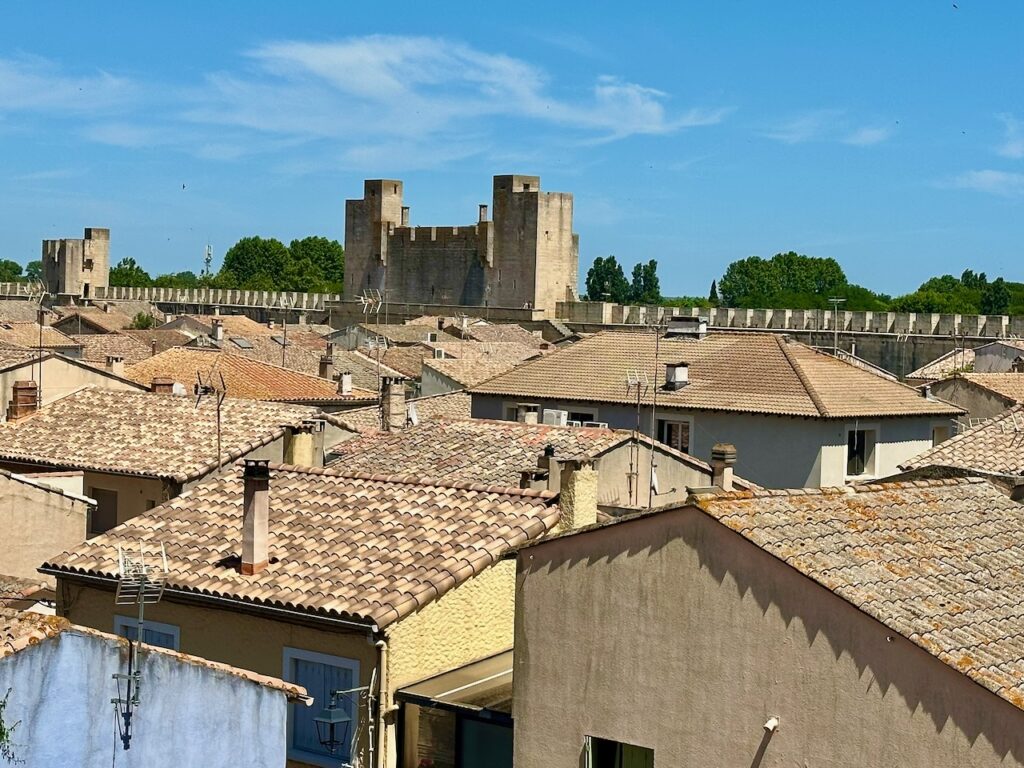
The Ramparts of Aigues-Mortes
Airgues-Mortes is probably the best preserved walled city in Europe. Its 13th century walls are about 1.6km (1 mile) long. Along its length there are twenty towers and ten gates which allow for access at multiple locations.
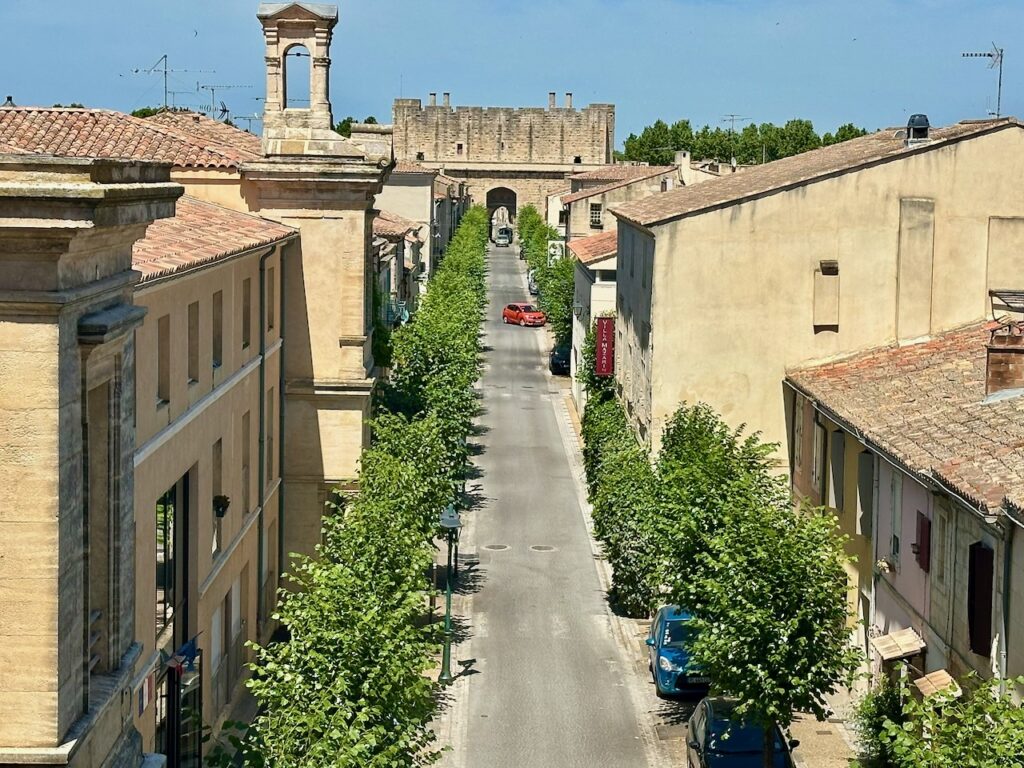
We walked entire length looking across the magnificent views over the rooftops, vineyards and the pink salt marshes of the French Mediterranean.
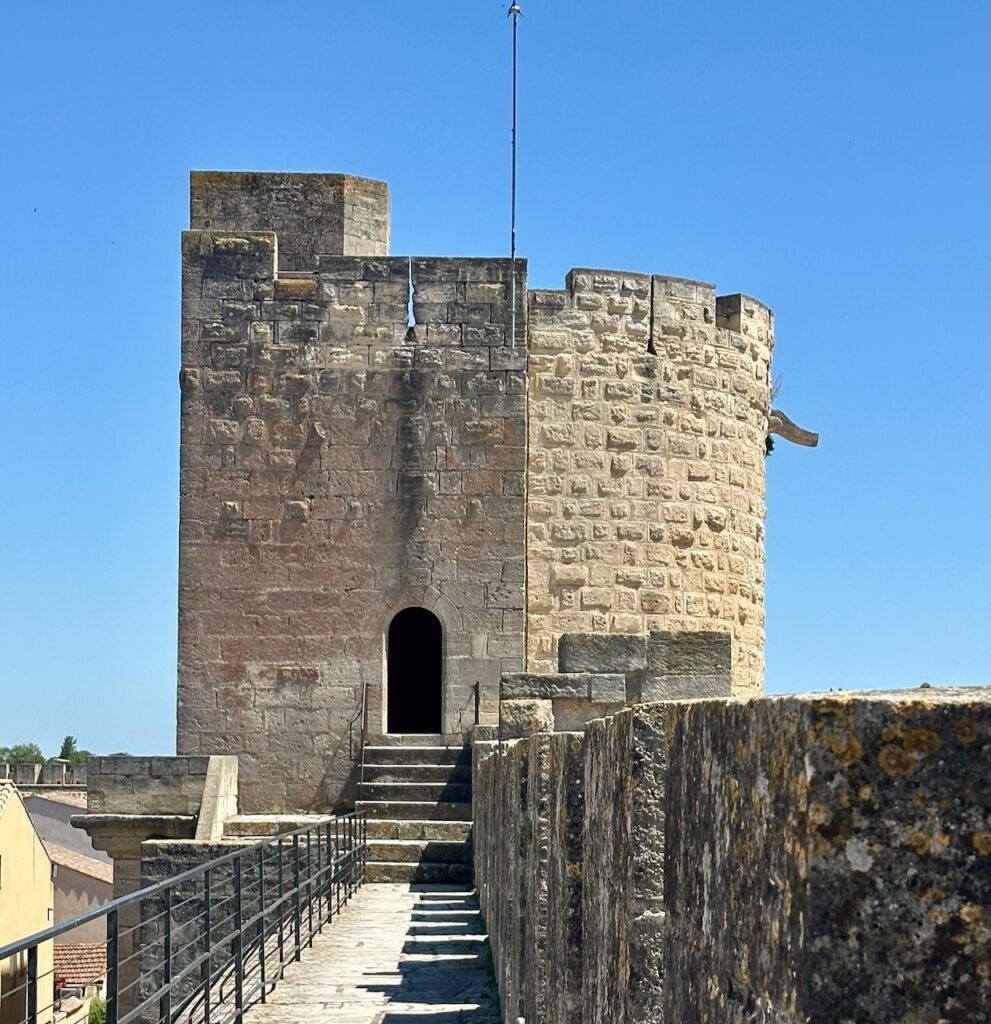
The salt marshes
Aigues-Mortes is most known for its Fleur de sel and sea salt. The salt pans which surround the city are are among the largest in the Mediterranean. The views from the rampart walls are magnificent.
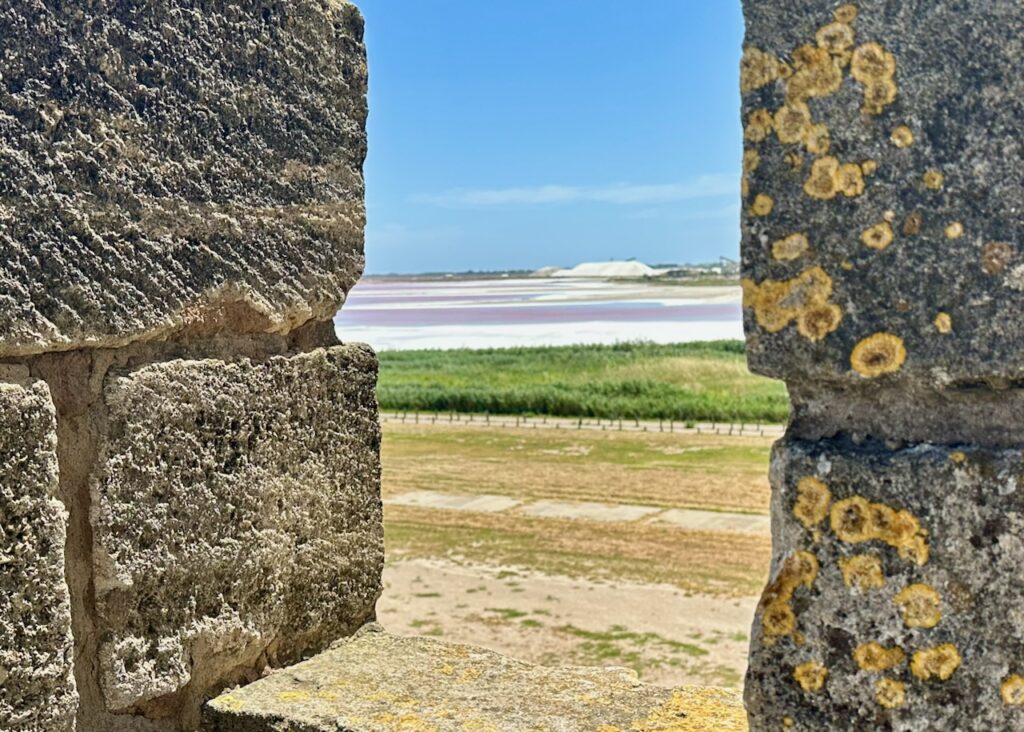
During summer, algae and microorganisms can turn the water a striking pink, contrasting beautifully with the brilliant white salt mounds. It’s a breathtaking, almost surreal sight. Flamingos are frequently seen feeding in the lagoons.
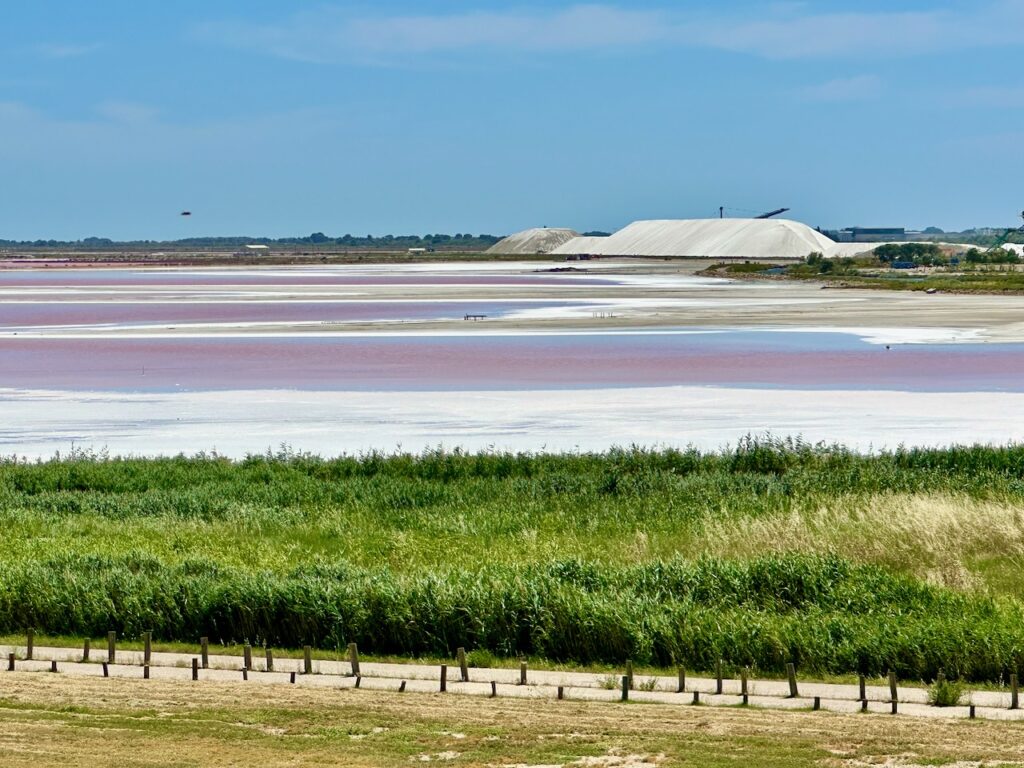
Tour de Constance
Tour Constance, seen here in the distance, was a massive defensive tower which served as both fortress and prison. During the 17th and 18th centuries it held many Protestant Huguenot women after the revocation of the Edict of Nantes. The most famous prisoner was Marie Durand, who spent 38 years imprisoned there. The word ‘résister’ (resist), carved into the stone of her cell remains a powerful symbol of religious freedom.
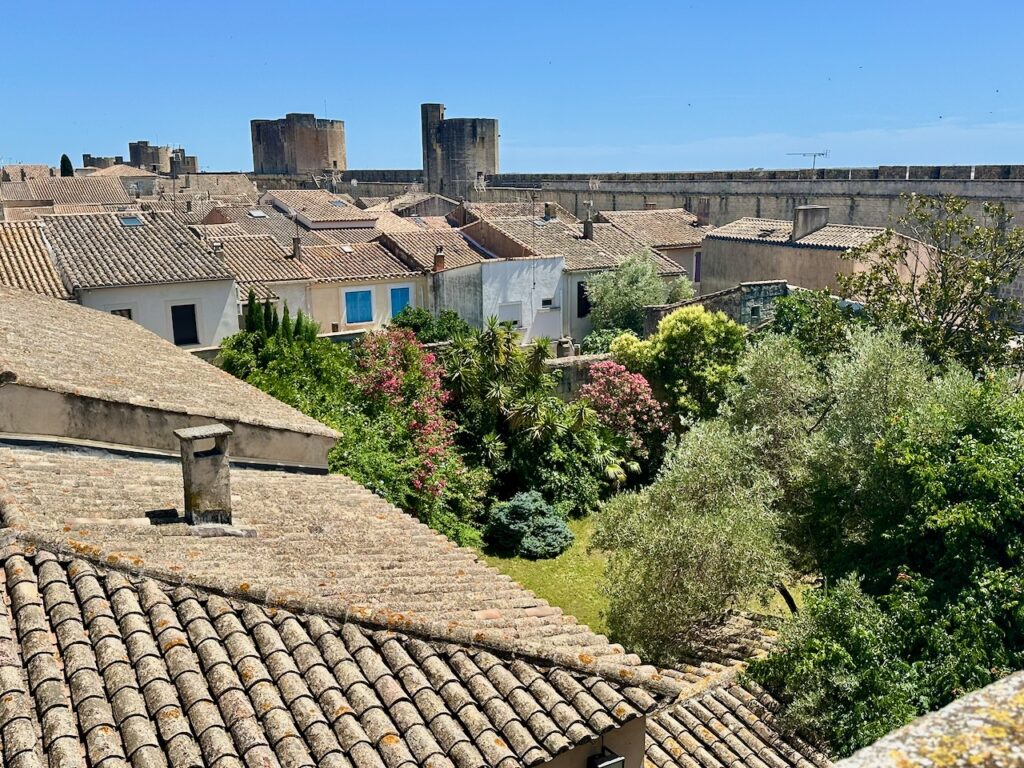
Place Saint-Louis
This lively central square is lined with cafés and restaurants beneath plane trees and is dominated by a statue of King Louis IX who founded Aigues-Mortes. In the mid-1200s, King Louis IX chose Aigues-Mortes—its name means ‘Dead Waters’—to build a royal port as France had no direct access to the Mediterranean that was free from foreign control. From here, he embarked on both the Seventh Crusade in 1248 and the Eighth Crusade, during which he died in Tunis.
Although the coastline later silted up and the harbour lost its importance, the town remained largely untouched, preserving its medieval layout.
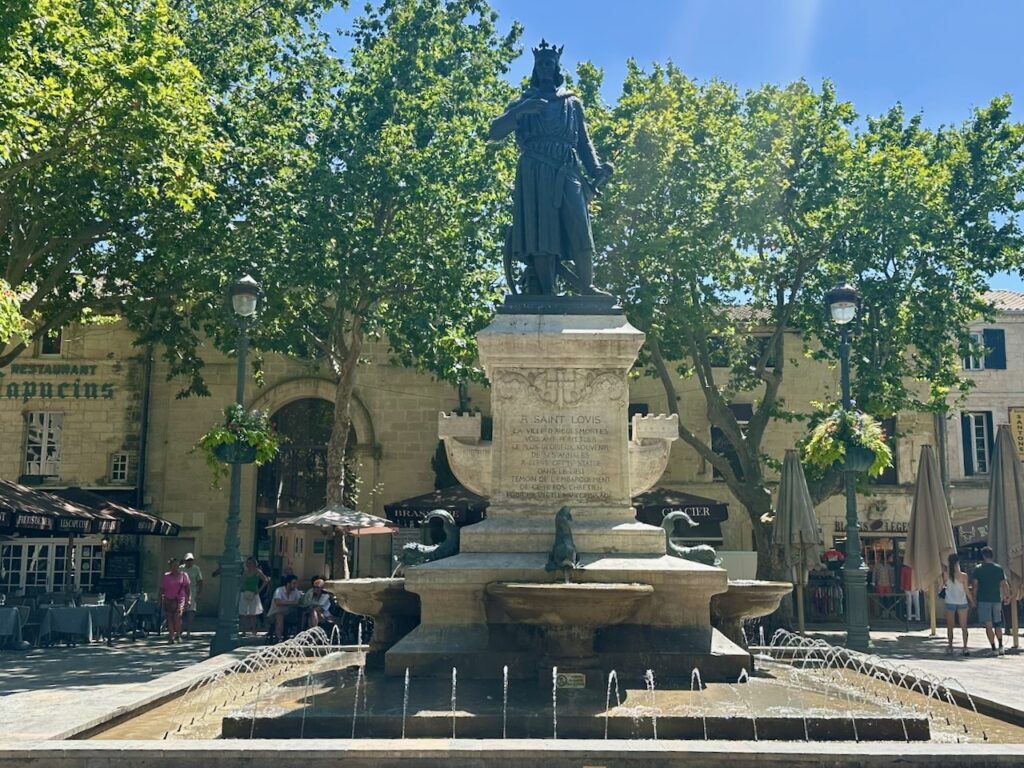
Aigues-Mortes is one of the highlights of southern France. Unlike the more glamorous seaside resorts nearby, it feels like stepping back into the Middle Ages. Allow yourself half a day to explore, walk the ramparts, wander the narrow streets, have a drink in Place Saint-Louis and if time permits tour the salt marshes. Sadly we didn’t have time to do this, the final one of les plus beau villages de France beckoned, the one dearest to our hearts, our fairy tale village of Lourmarin.
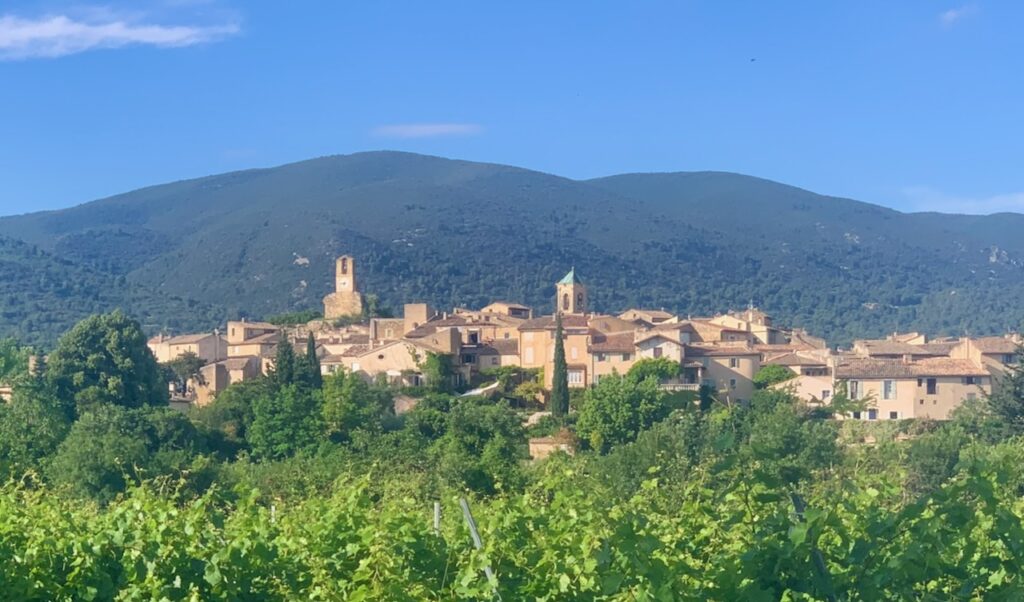
It had been a wonderful week exploring more of France but despite all the beautiful places we’d visited, we realised more than ever before why we’d bought a home in Lourmarin. To us, it is simply the most special. You can rent our home and discover Lourmarin for yourself. This enchanting little corner of Provence, a magical place which we’re so lucky to call home, for a few weeks several times of the year.


No Comment