
On day 7 we unintentionally found ourselves following part of the pilgrim trail Santiago de Compostela from Saintes to Saint Émilion. This 1000 year old trail, also called ‘The way of St James’, follows the pilgrim trail to Santiago de Compostela Cathedral, in the Galicia region of north western Spain. It is believed that the relics of Saint James, one of the Apostles are buried here. Saint James is the only apostle whose martyrdom is recorded in the New Testament and he was well known for his association with pilgrimages centered on Santiago de Compostela. Although there are many pilgrim routes, the most popular is ‘The French Way’~Camino Francés. This begins in Saint-Jean-Pied-de-Port, just south of where we’d been the previous day in southern Brittany and covers about 780 km (485 miles) to cross the Pyrenees into northern Spain. Over the centuries people have followed its path for religious and spiritual reflection, adventure, or personal challenge, taking about four to six weeks to complete. We had first discovered the Santiago de Compostela trail in the beautiful, plus beau village de France, in the Aveyron, Conques
Saintes
Our first stop on the Santiago de Compostela trail was in Saintes, only 23km (14miles) from Pont-l’Abbé-d’Arnoult, where we’d stayed the night before. We weren’t visiting it in the knowledge that it was on this famous trail but because of its relatively little known, but incredible Roman heritage.
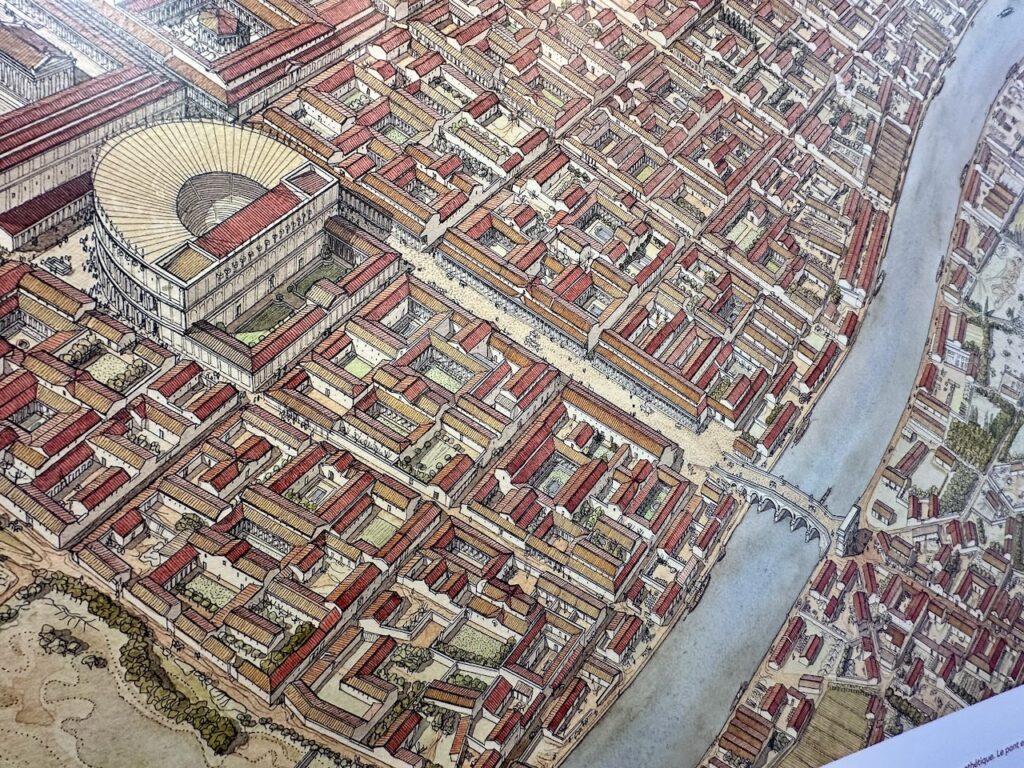
Sat on the banks of the Charente River, Saintes is located in the Charente-Maritime department of the Nouvelle-Aquitaine region and is one of western France’s oldest and historically significant towns. Founded by the Celtic Santones tribe it became the Roman city of Mediolanum Santonum after the conquest of Gaul by Julius Caesar. During the 1st century AD it flourished as the first capital of Roman Aquitania, when grand public buildings, baths, temples and an amphitheatre were all built.
Arch of Germanicus
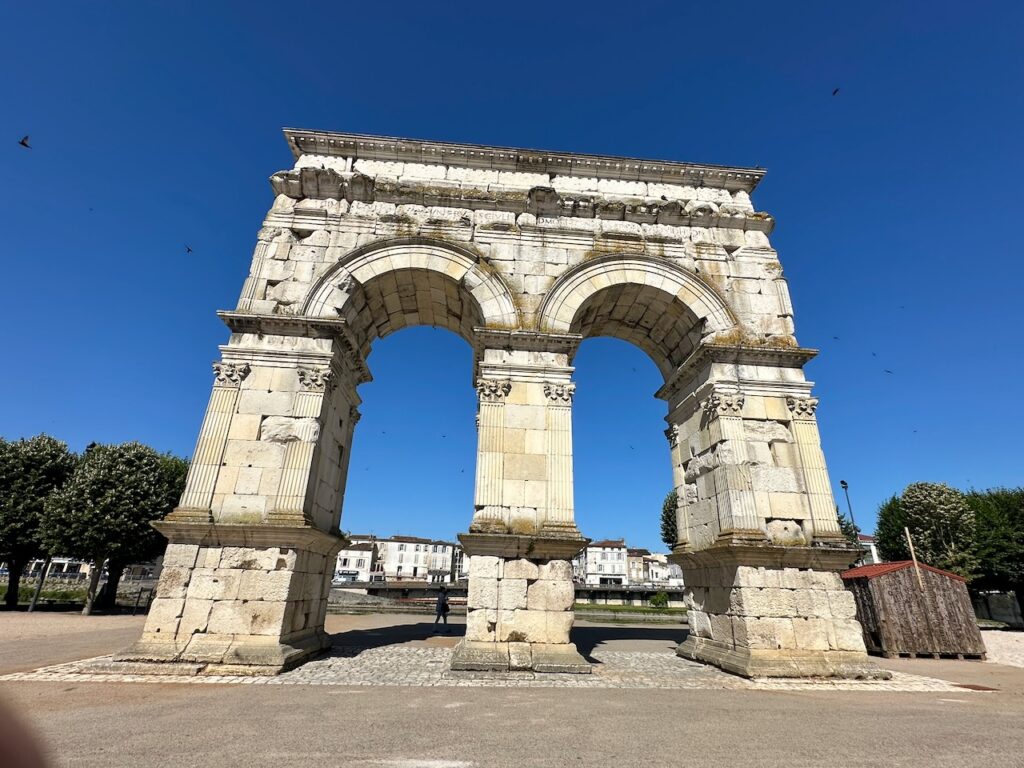
Built in AD 18, this beautifully preserved Roman triumphal arch originally stood at the entrance to a bridge crossing the Charente. It remains one of the city’s best-known landmarks. Close by there are several Roman artifacts and the nearby museum does a wonderful job of explaining Saintes’ Roman Past. This map shows the original Roman city and the location of the Arch of Germanicus.
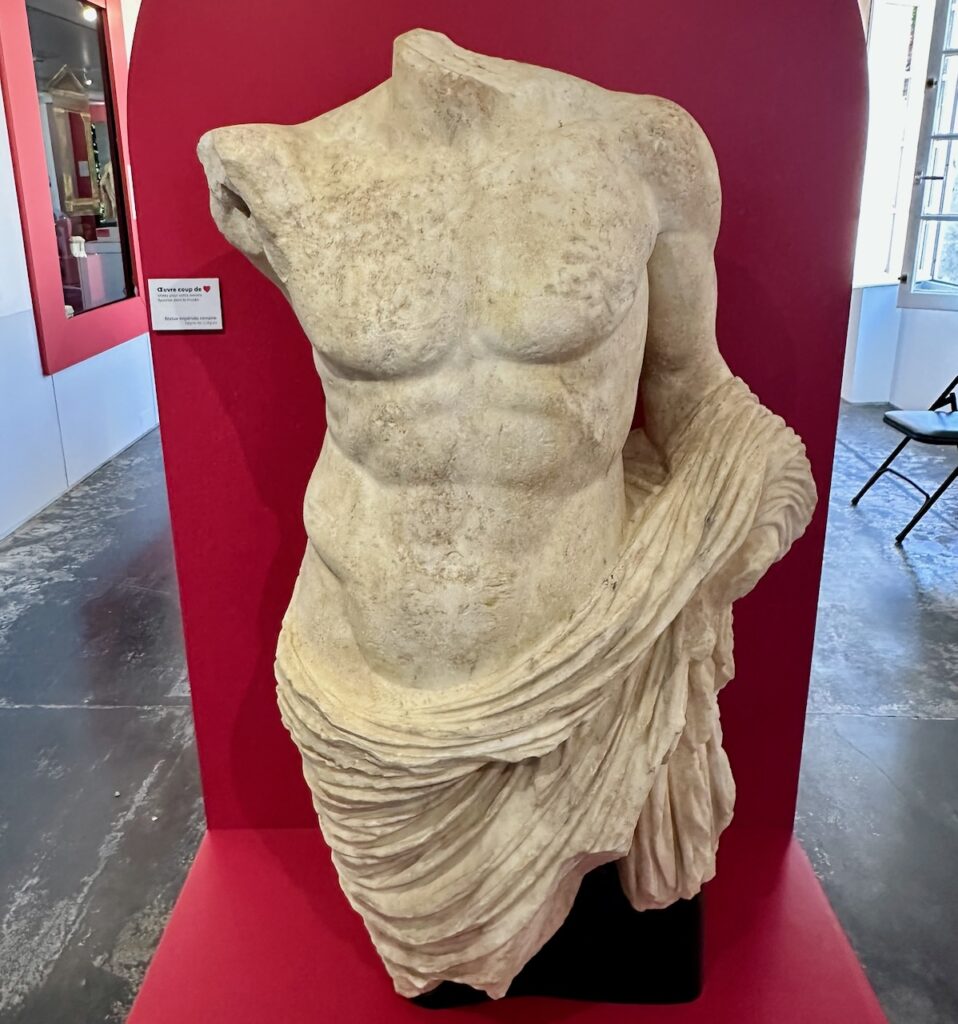
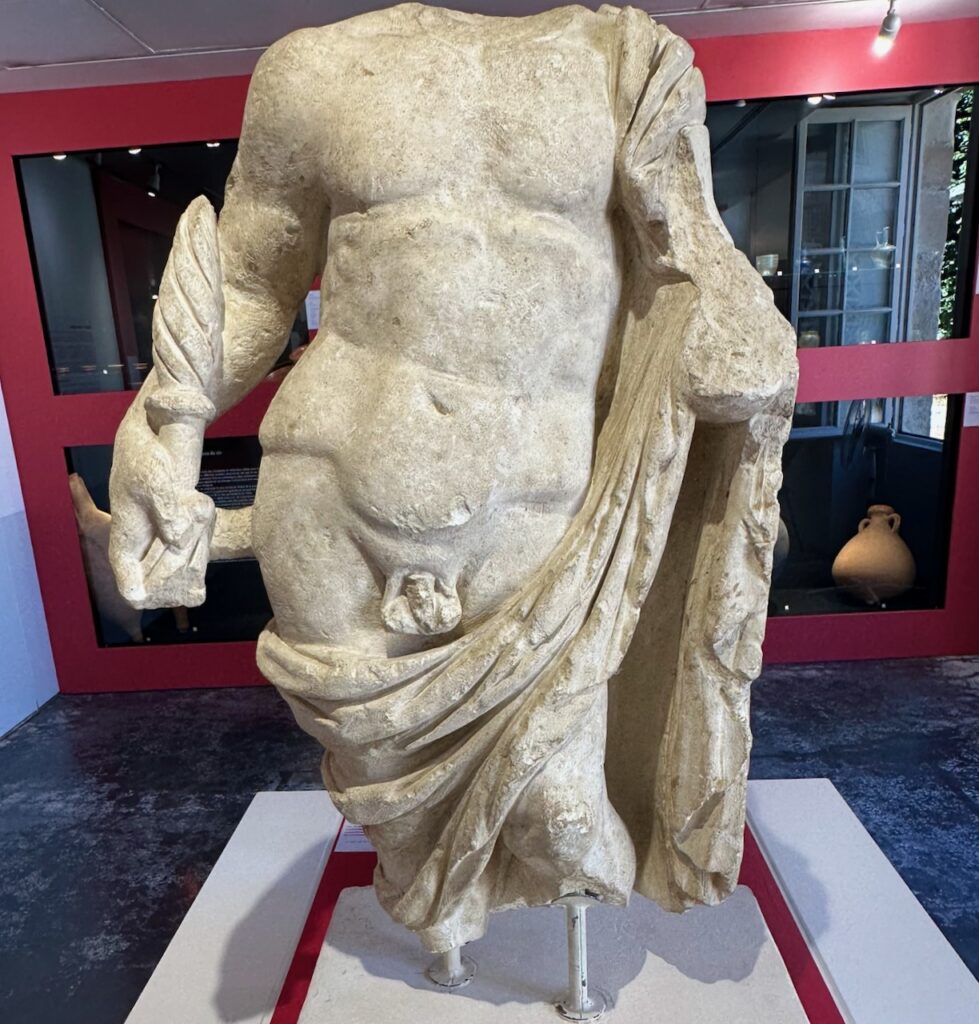
Roman sculptors in the Saintes’ Roman Museum
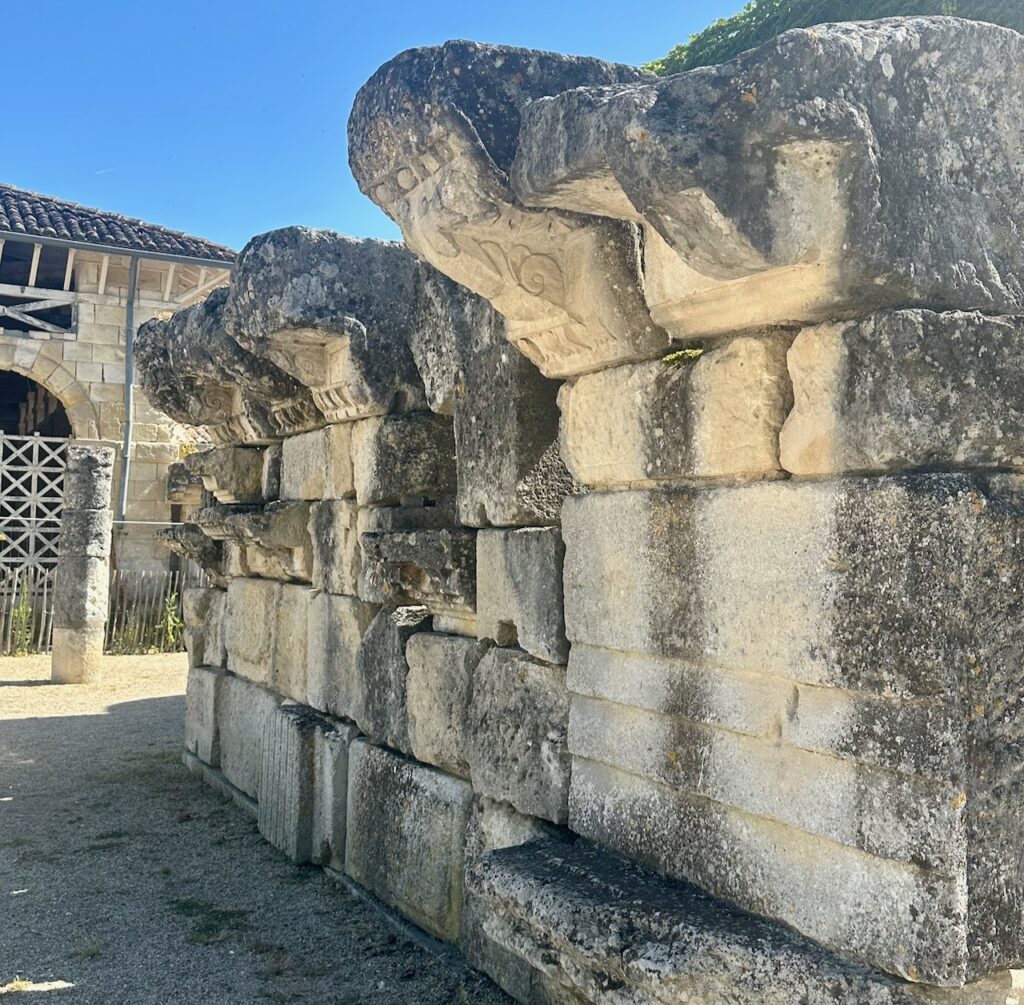
The ampitheatre was a thirty minute walk from the arch of Germanicus but worth every step, despite the hot sunshine.

One of the oldest surviving Roman amphitheatres in Gaul, it could once hold around 15,000 spectators for gladiatorial contests and public spectacles. Below is an artistic rendition of what it would have looked like then.

1906 excavations of Arènes de Saintes

Early 20th century visitors to Arènes de Saintes

An early 20th century view of the ampitheatre in Saintes.

Popular films often give the impression that gladiators fought until one of them died, but that was not the norm. They were expensive to train and maintain, so their owners wanted to preserve their investment. It was interesting to learn that experienced gladiators often fought dozens of times and some won their freedom.
After the decline of the Roman Empire, Saintes became an important Christian centre. During the Middle Ages it prospered as a pilgrimage stop on the route to Santiago de Compostela, with monasteries and magnificent churches built to welcome travellers.
Saint-Pierre Cathedral
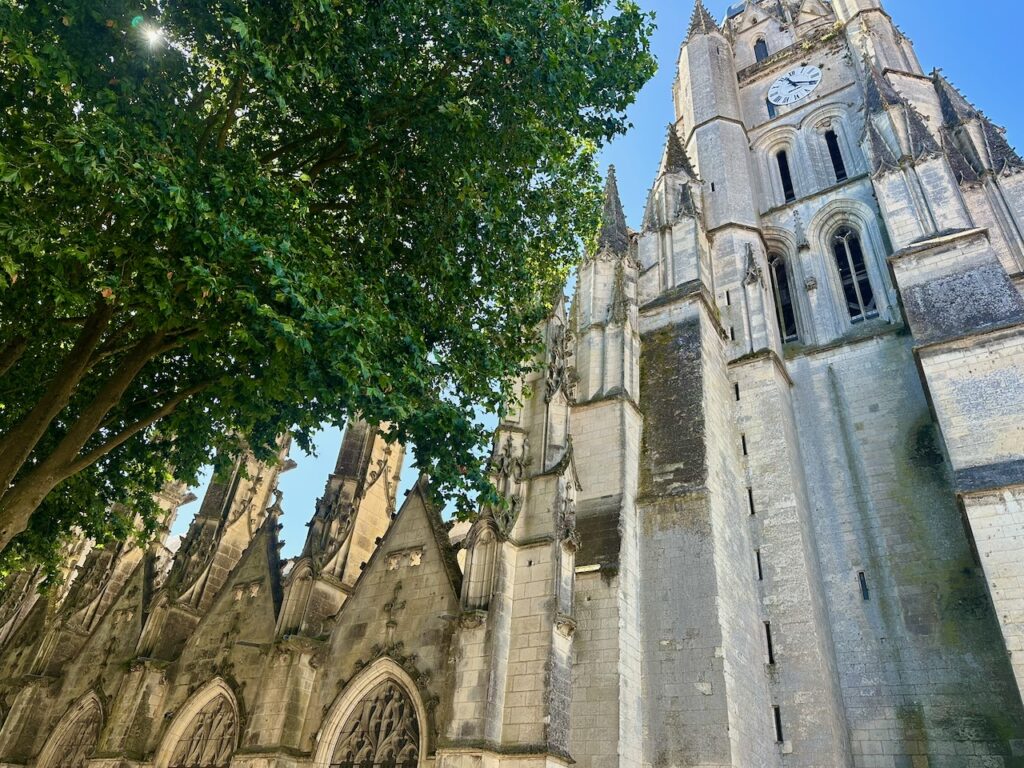
The Gothic cathedral was rebuilt after the French Wars of Religion and offers fine views from its tower.
The historic centre is filled with elegant limestone buildings, medieval lanes, cafés and small squares. If you’re visiting Saintes traveling south, maybe even to St Émilion as we were, allow yourselves at least three hours to explore this magnificent historic city.
Aubeterre-sur-Dronne
Nestled on the banks of the Dronne River in the Charente department, 94km (58miles) south of Saintes is Aubeterre-sur-Dronne, another captivating one of Les Plus Beaux Villages de France. Its name probably derives from the Latin Alba Terra, meaning ‘white earth,’ referring to the pale limestone cliffs on which the village is built.
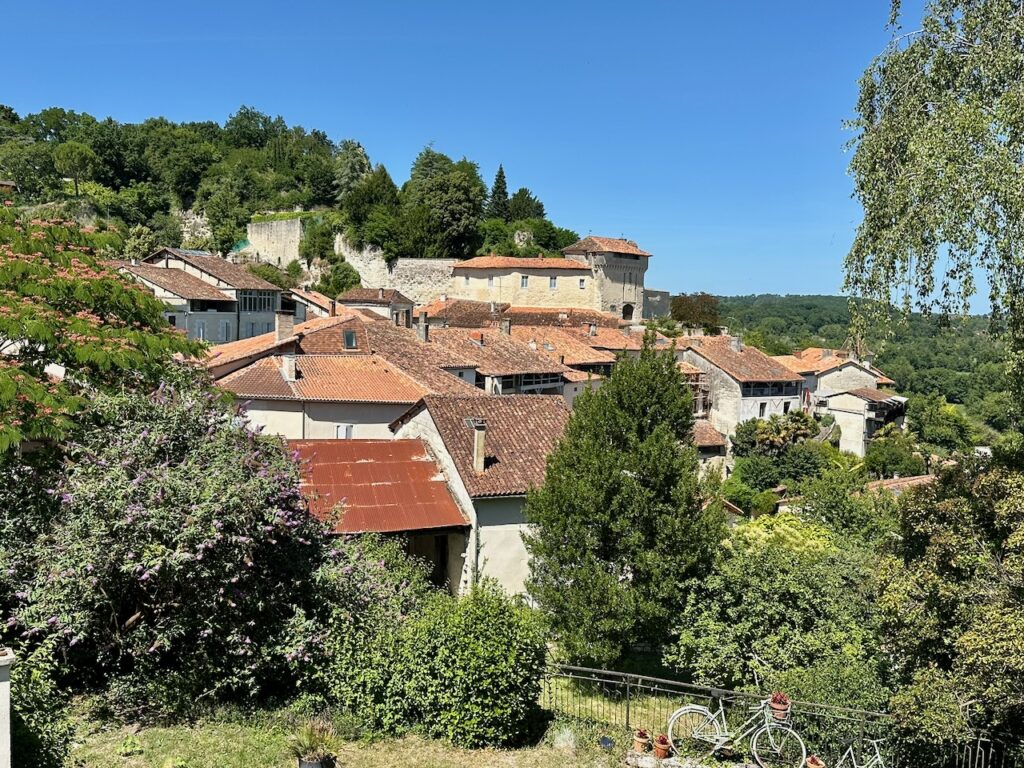
Inhabited since prehistoric times, the village became important during the Middle Ages because it was also on one of the pilgrimage routes to Santiago de Compostela with thousands of pilgrims stopping here on their way to Spain. Wealth from these pilgrims and trade funded the construction of its remarkable churches and under the powerful Lords of Aubeterre, who built a castle above the village (now largely disappeared) Aubeterre flourished. The village frequently changed hands between the English and French during the Hundred Years’ War, because of its strategic location near the borders of English Aquitaine. In the 16th century, during the French Wars of Religion,it became a centre of Protestantism and many of its medieval buildings date from the rebuilding that followed.
The Monolithic Church of Saint-Jean
The village’s greatest treasure is The Monolithic Church of Saint-Jean, one of the most extraordinary churches in France and indeed anywhere we’ve been.
Entrance to The Church of Saint-Jean
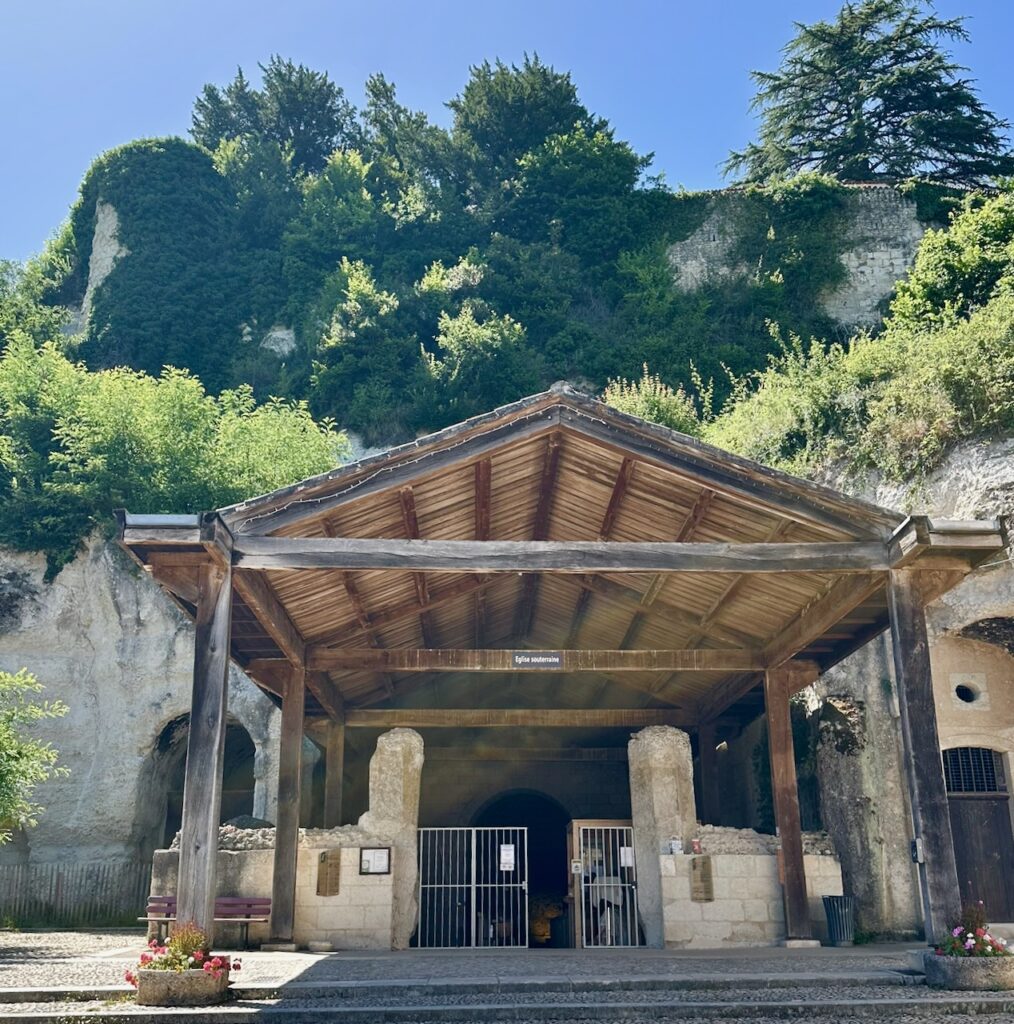
The entire building was carved directly into a massive limestone cliff. Dating from around the 7th, in the early 12th century, after the First Crusade, Benedictine monks dramatically enlarged it into the vast underground church seen today.
Doorway into the sanctuary of the church of Saint Jean

Tradition holds that its builder, Pierre de Castillon, was inspired by the churches he had seen in Cappadocia and the Church of the Holy Sepulchre in Jerusalem.
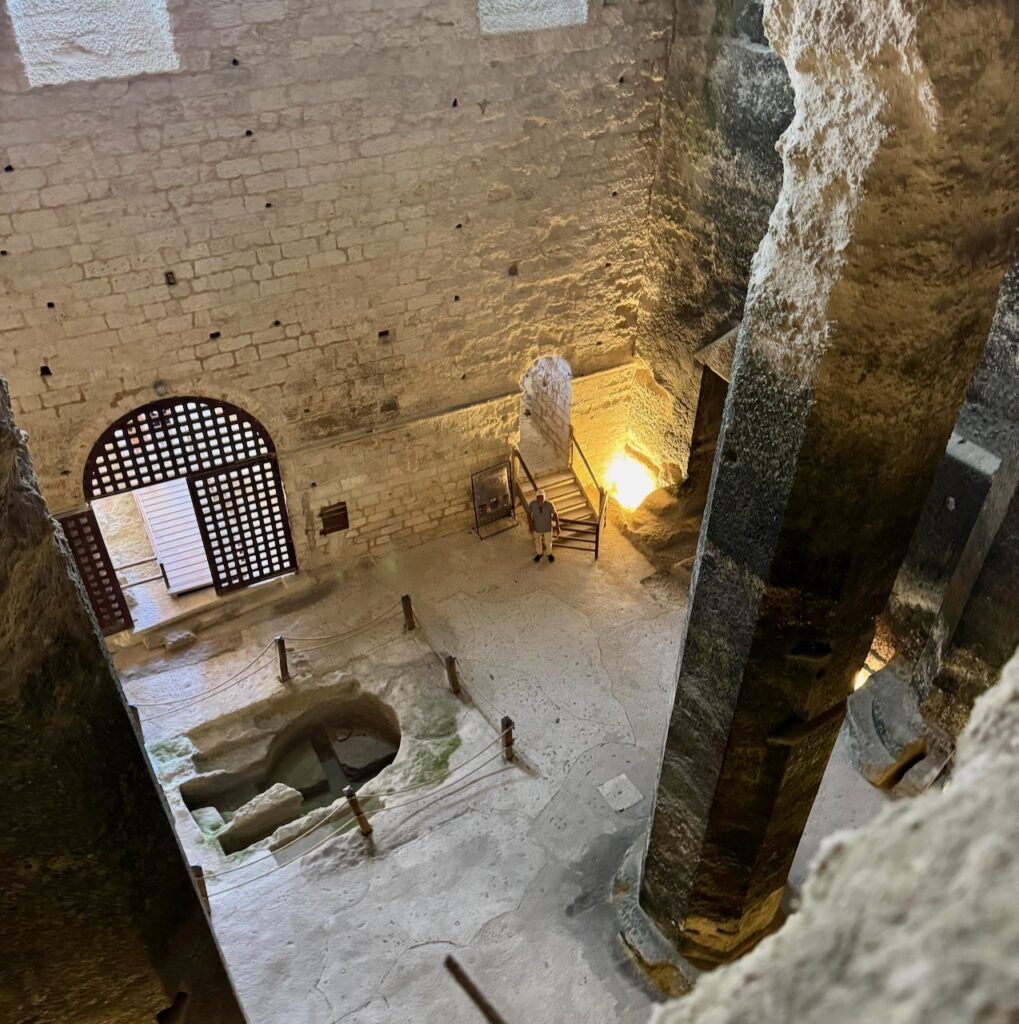
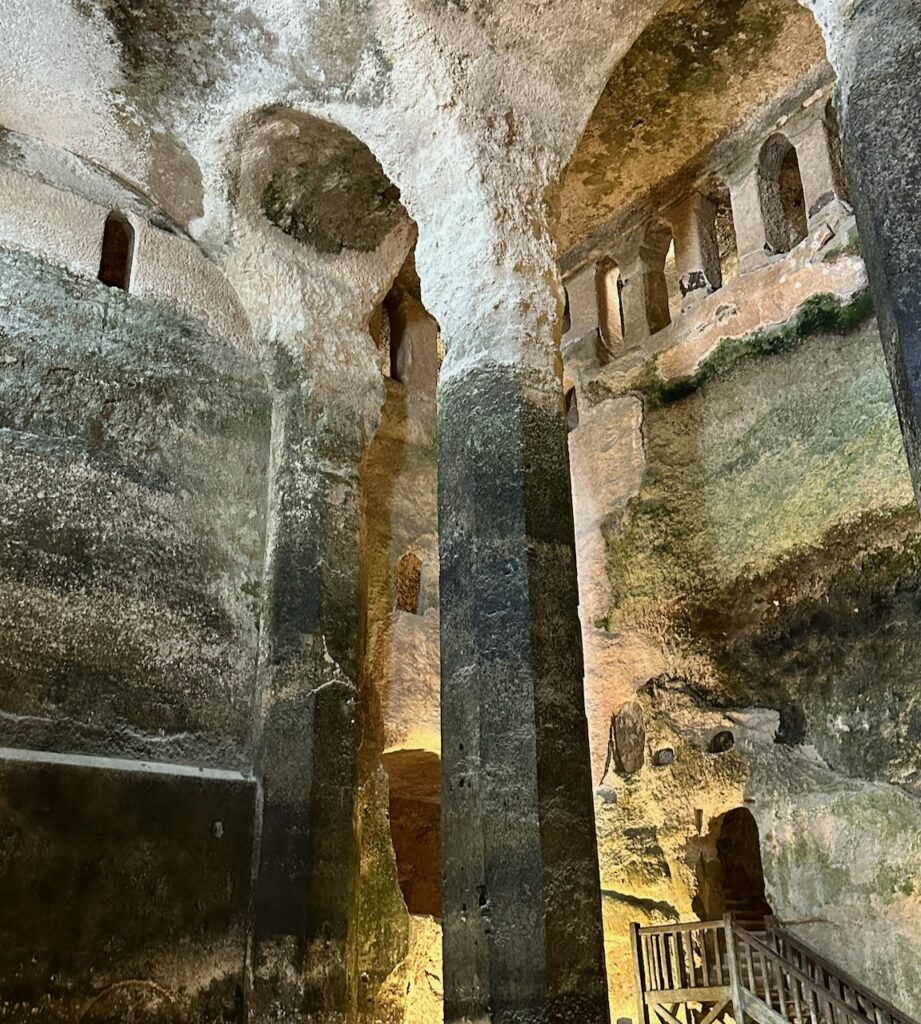
The church is astonishing in scale. Approximately 27 metres long, 16 metres wide, and 20 metres high. It is one of the largest subterranean churches in Europe.
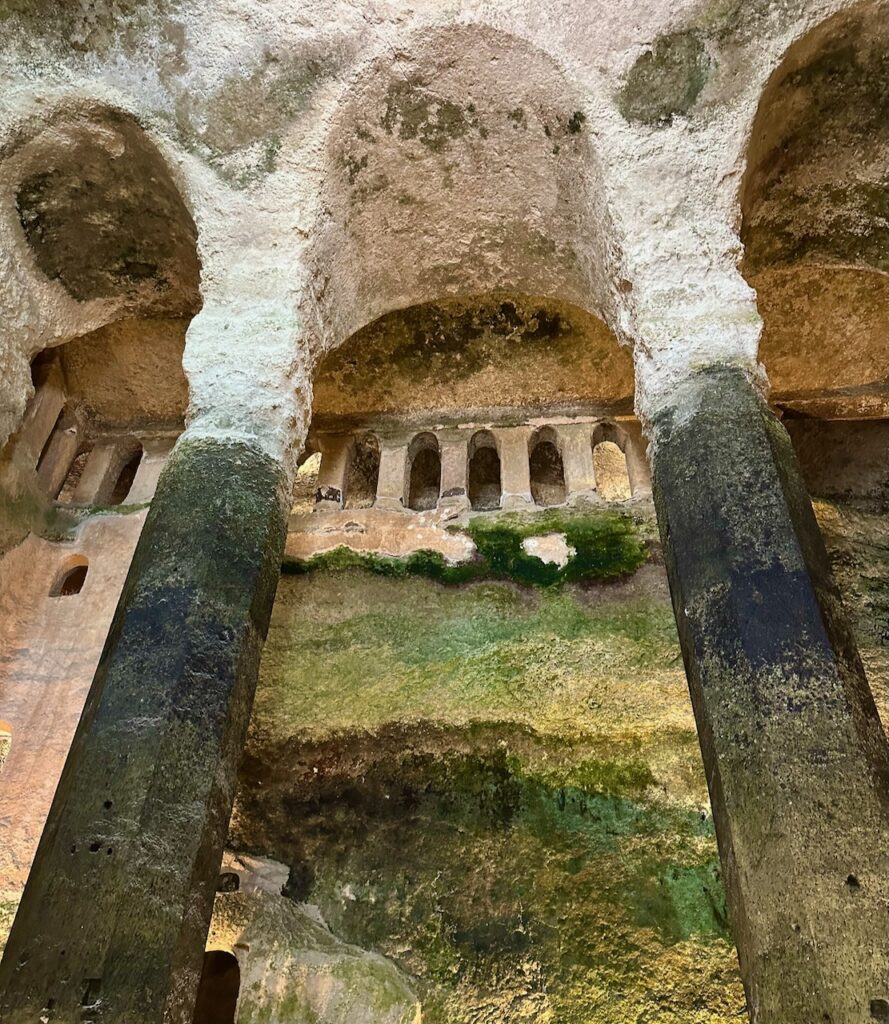 Entirely excavated from solid limestone, requiring the removal of thousands of cubic metres of rock. The interior is unlike any other church in France.
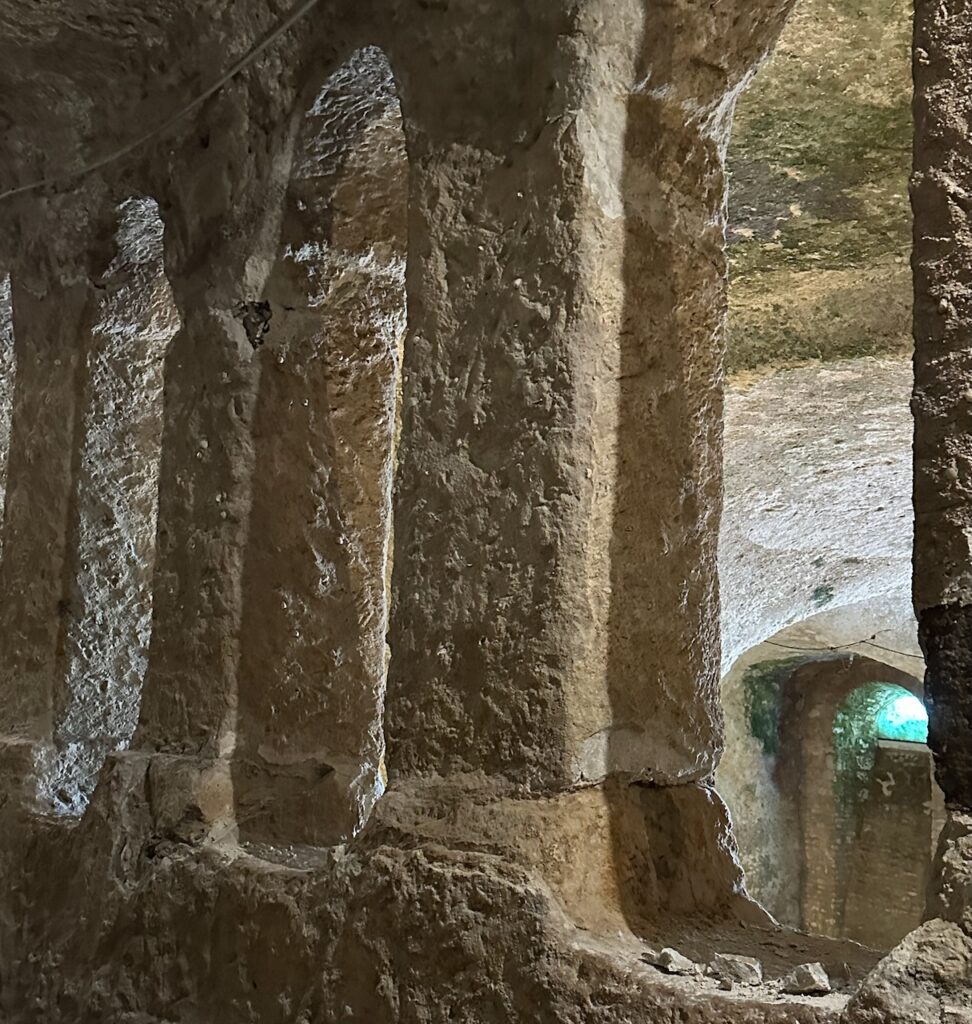
The great nave, soars nearly 20 metres high.
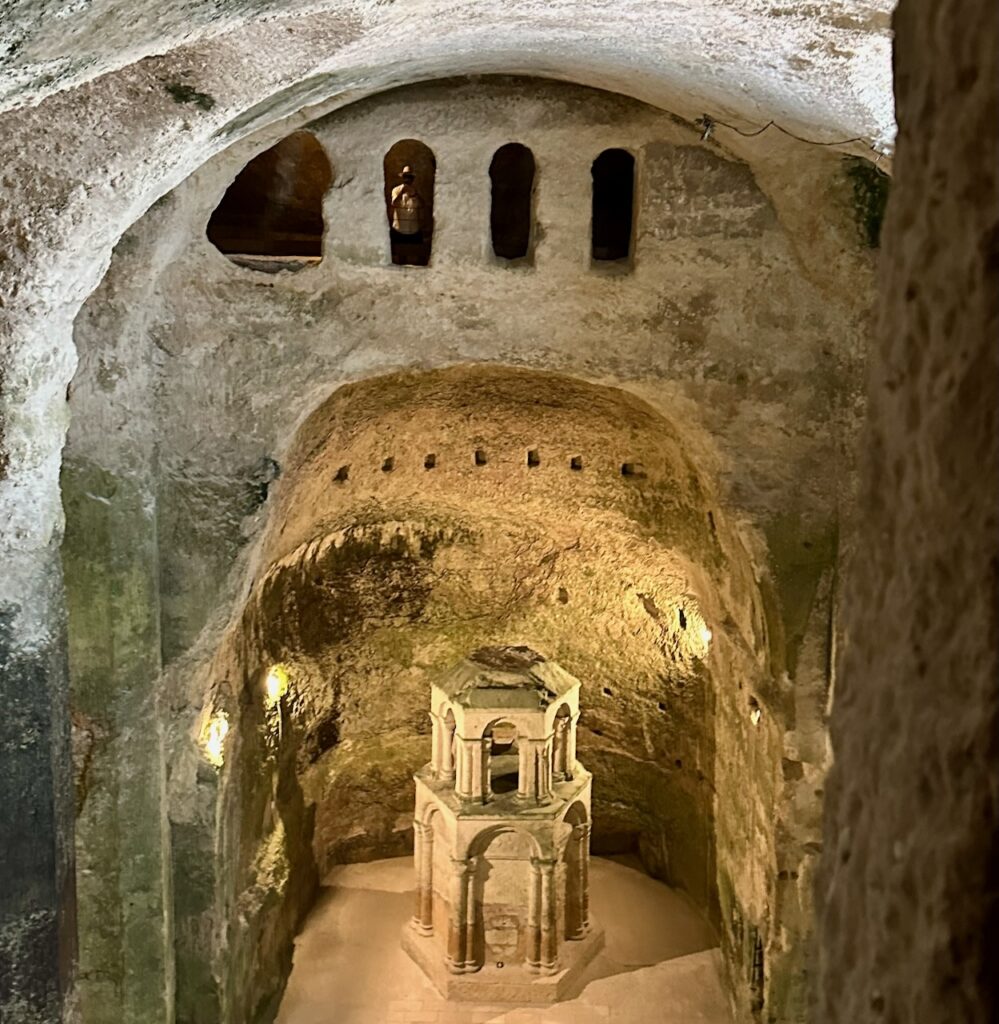
A six-metre-high Romanesque reliquary, carved from a single block of stone and modeled on the Holy Sepulchre in Jerusalem.
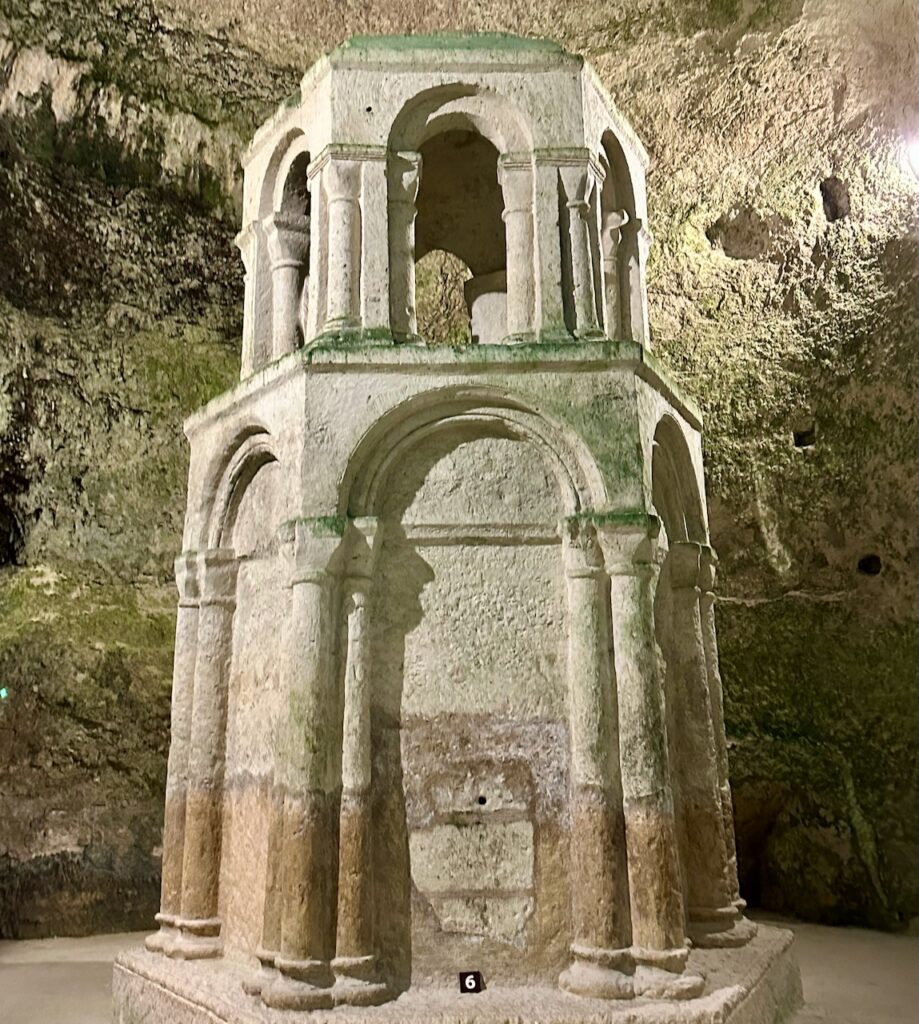
There is an underground necropolis, where archaeologists uncovered more than 80 medieval stone sarcophagi.
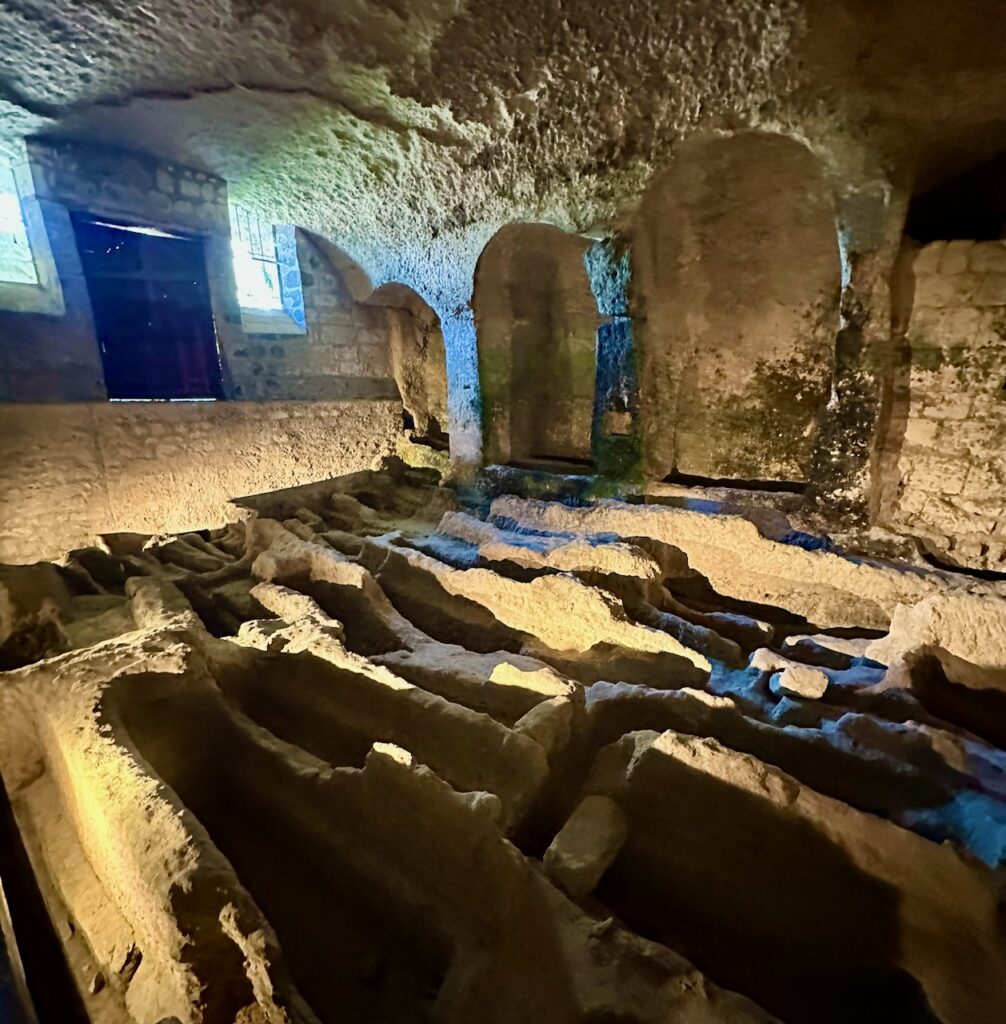
A circular gallery (triforium) overlooks the nave. The acoustics are remarkable and the living rock has created an incredible, cave-like atmosphere.
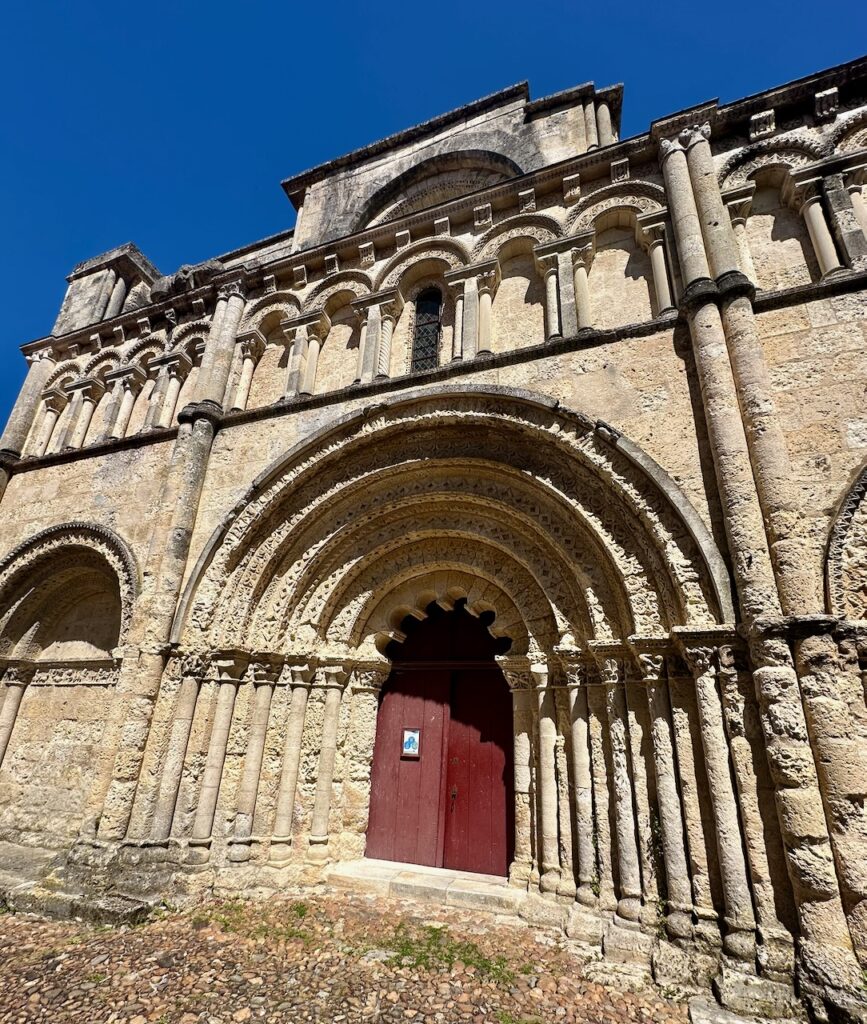
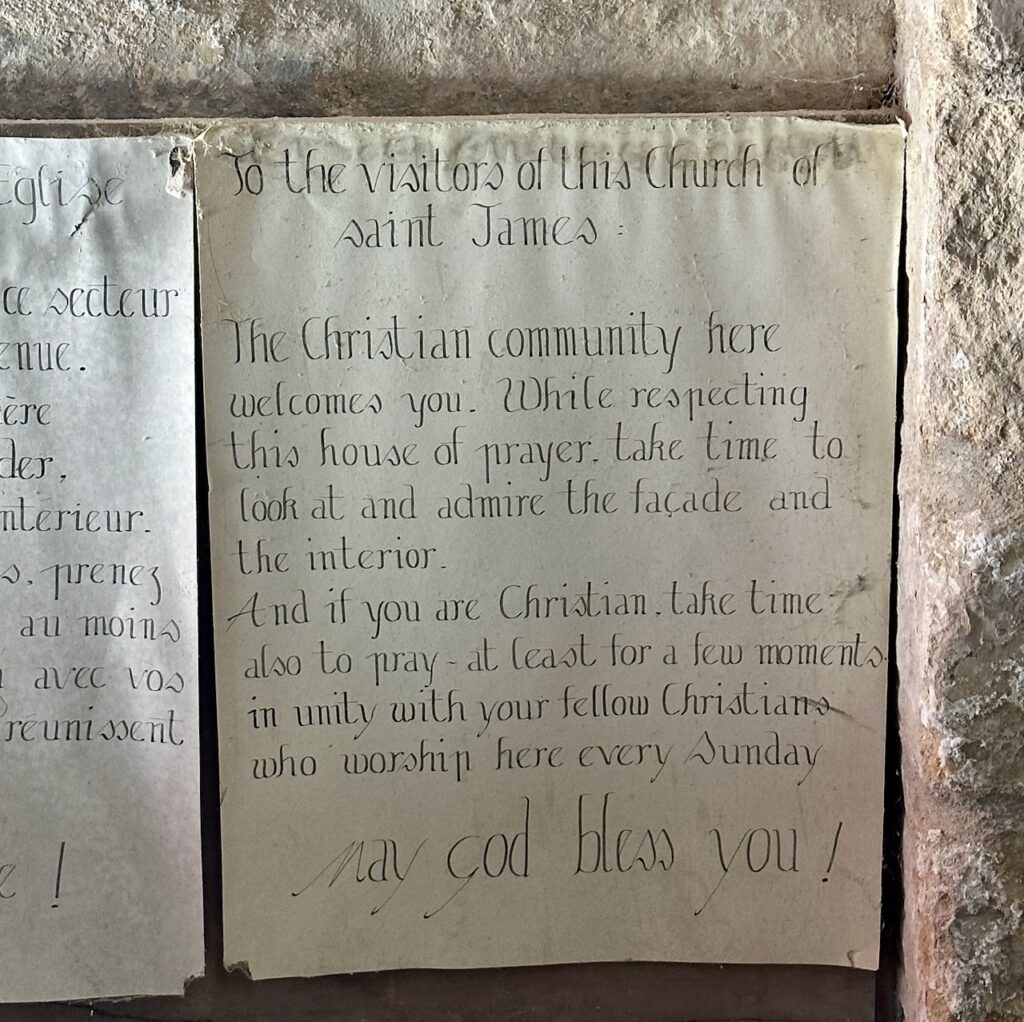
The Romanesque 12th century Église Saint-Jacques is also impressive. Built for pilgrims travelling to Santiago de Compostela, it features an elegant sculptured façade in the Saintonge Romanesque style, richly decorated with arches, columns and biblical carvings.
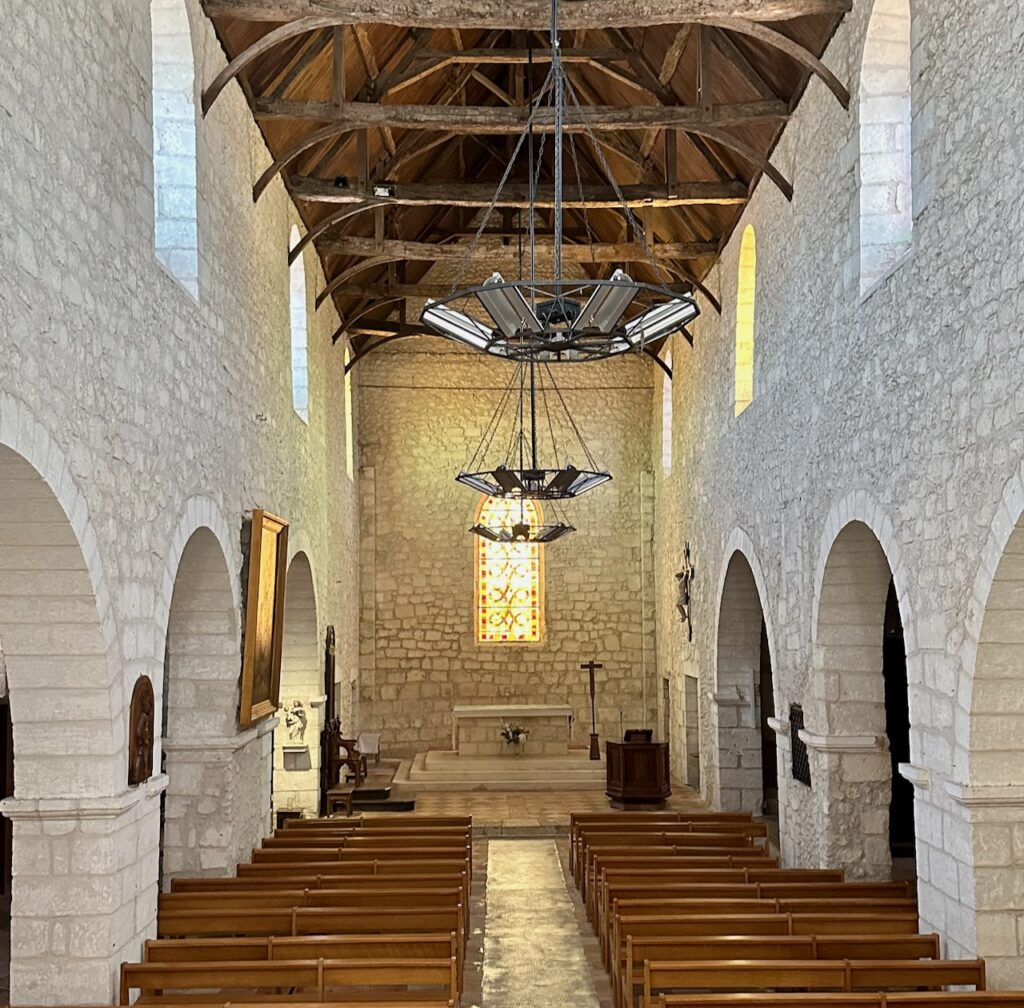
Although damaged during the Wars of Religion, much of its original architecture survives, making it one of the finest Romanesque churches in the region.
A visit to Aubeterre-sur-Dronne should not be missed. Visitors are drawn by its steep cobbled lanes, Renaissance houses, shaded central square lined with cafés, spectacular views over the Dronne Valley but the bighlight is its’ truly unique underground church, The Monolithic Church of Saint-Jean.
Night 7: Saint Émilion
Saint-Émilion was 59km (39miles) further south, a beautiful drive through the vineyards and farmland. Saint-Émilion belongs to Canton of the Coteaux of Dordogne and is one of France’s most celebrated wine towns.
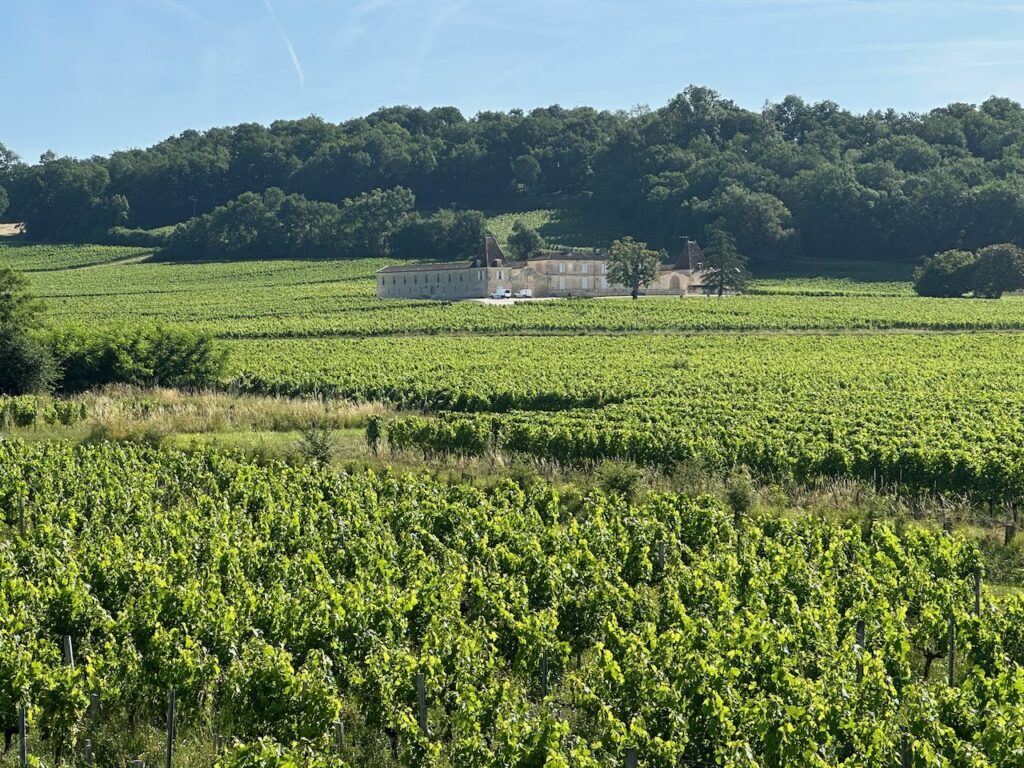
Perched on a limestone ridge about 40 km east of Bordeaux, it combines a remarkably preserved medieval village with some of the world’s finest vineyards.

In 1999, the town and surrounding vineyards became the first wine growing area to be inscribed as a UNESCO World Heritage Centre Site.

We spent the night amongst the vines in the luxurious and chic Château Petit Monlot, a beautifully restored, modern wine château. A delicious breakfast was included although it was not possible to have dinner there. We ate in the town but sank a local vintage on our return in the pretty garden surrounded by the vineyards and the chirping of the cicadas.

The town owes its name to Saint Émilion, the eighth-century Breton monk who sought solitude in a cave carved into the limestone hillside. His reputation for holiness attracted pilgrims, and a settlement gradually developed. The small cave where Saint Émilion is believed to have lived, Hermitage of Saint Émilion, can be visited on guided tours. By the 12th century Saint-Émilion also lay on one of the pilgrimage routes to Santiago de Compostela. Like other towns we visited, the town’s wealth grew and with the addition of its excellent wine trade Saint-Émilion became a prosperous medieval town.

Half the pleasure of Saint-Émilion is simply wandering its narrow cobbled lanes. Some are quite steep, winding between the honey-coloured stone houses, the wine merchants and the small squares brimming with cafés.

Monolithic Church of Saint-Émilion

The church is the town’s greatest treasure. Carved directly from the limestone in the 11th and 12th centuries, it is another one of Europe’s largest underground churches. Above it rises an impressive bell tower offering panoramic views over the vineyards. The cloisters feel timeless.

One can almost hear the swish of cassocks as the monks hurry to prayer.

One wall of the cloisters tells the story of the region as it changed hands between the English and the French during the Hundred Years’ War and the long English rule over neighbouring Aquitaine.

The wine of Saint-Émilion
Saint-Émilion of course is renowned for elegant red wines based primarily on Merlot and often blended with Cabernet Franc.

The surrounding countryside is dotted with famous châteaux, from prestigious classified estates to small family-owned vineyards. Every shop seemed to be one selling wine, offering to ship anywhere in the world.

Saint-Émilion, is in the Gironde, Nouvelle-Aquitaine, 40 km (25 miles) east of Bordeaux, 55 km (34 miles) from Libourne a must stop should you be in this beautiful part of western France. And don’t forget to buy some of that incredible local wine!


What a fabulous post, your photographs are gorgeous.
So glad you enjoyed it!